When proportional scoring hides a hard failure
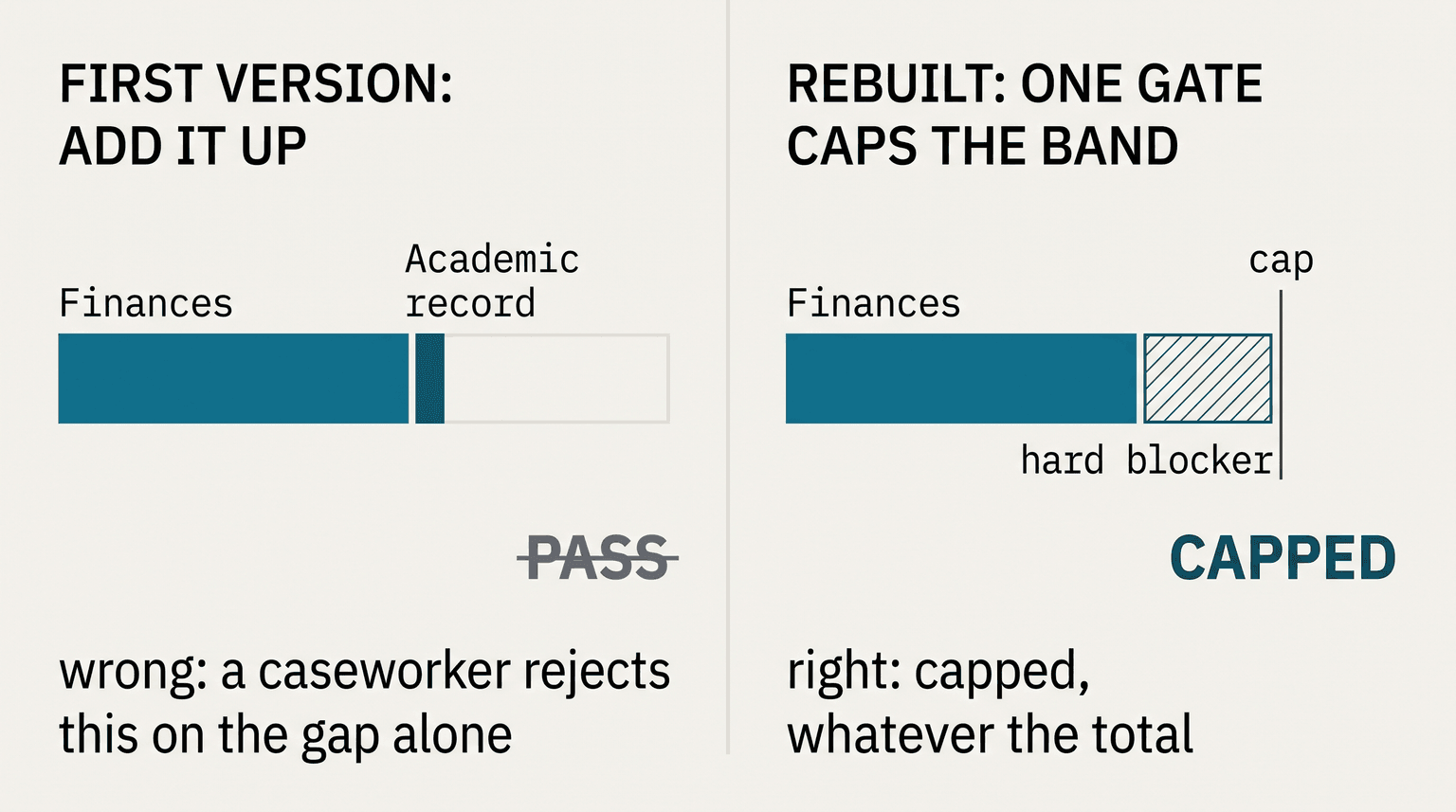
The first version of the ParchiVisa scoring engine weighted each criterion and summed the result. It was easy to reason about, easy to tune, and wrong.
A test profile made that clear: strong finances, and a long unexplained gap in the academic record. The engine returned a pass. A caseworker would have rejected that application on the gap alone, without ever reaching the bank statements.
Proportional weighting assumes criteria can compensate for one another. Eligibility rules don't work that way. Some conditions are gates, not inputs, and no amount of strength elsewhere buys you past them.
I rebuilt it as tiered band-capping. Every criterion still contributes, but a single hard blocker caps the final band regardless of the total, and the rules live as data rather than as branches in the scorer.
What I'd still change: the thresholds come from published requirements and my reading of them. I can't yet separate a borderline pass from a borderline fail, and that needs outcome data I don't have.